Home
Function and long-term planning
Dental implants
An artificial root and custom restoration considered for missing teeth following examination, imaging and an individual health review.
Get assessed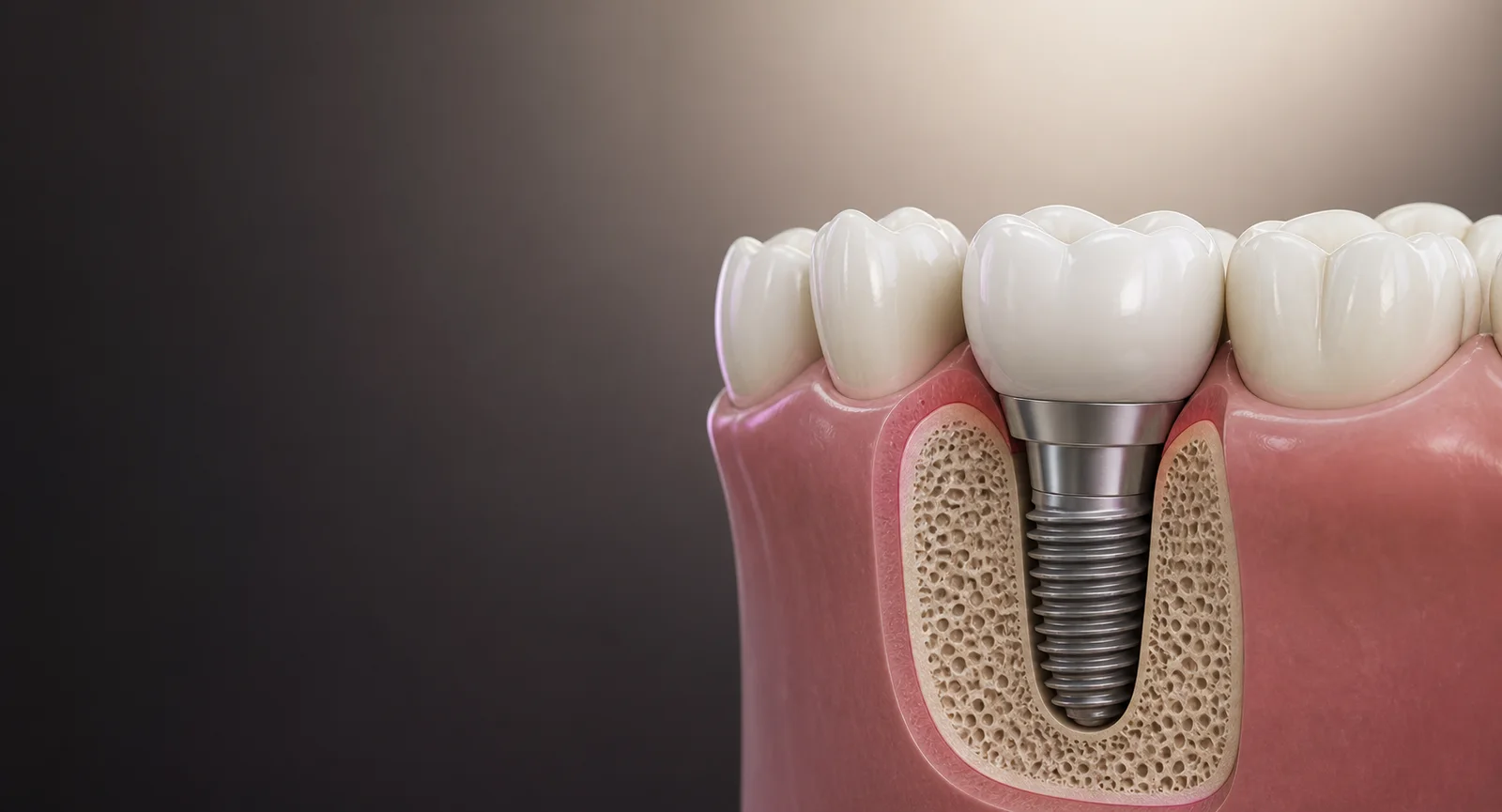 Illustrative treatment image
01
Understand the treatment
A dental implant is an artificial root placed in the jawbone to replace the root of a missing tooth. Once healing is complete, it may support a custom crown, bridge or implant-supported denture.
Illustrative medical image; it is not a real patient case or a promise of outcome.
02
When might it be considered?
Support a bridge when several teeth are missing
Support fixed or removable teeth in a fully edentulous arch
Offer an alternative to preparing neighbouring healthy teeth in suitable cases
03
Who may be assessed for it?
Adequate healthy bone and stable gum health
Good daily oral hygiene and commitment to regular reviews
General health compatible with a surgical procedure
Individual review of active gum disease, unmanaged diabetes, smoking, vaping and medication
04
Possible stages, from planning to review
Examination and imaging
Your oral condition, bone, gums and relevant medical history are assessed together.
Preparation
Active decay or gum disease is treated; extraction or bone augmentation may be discussed when clinically required.
Implant placement
The implant is surgically positioned according to the clinical plan.
Healing
The implant is allowed to integrate with the jawbone. This phase may take several months and varies by person.
Final restoration
An abutment and custom crown, bridge or denture are made and checked for fit and bite.
Maintenance
Daily care, professional cleaning and regular reviews support long-term health.
05
What to discuss before deciding
Healing varies with bone condition, grafting, general health and treatment complexity.
Possible complications include infection, failure to integrate, swelling, bruising or altered sensation in some treatment areas.
Ongoing plaque control and professional reviews are essential for the tissues around an implant.
06
Other approaches that may be considered
Conventional bridge
Removable denture
Monitoring without replacement where clinically appropriate
07
Frequently asked questions about this treatment
01How long does implant treatment take?
Integration may take approximately three to nine months in many cases. Grafting, healing and treatment complexity can extend the schedule; your timeline is confirmed after examination.
02Is everyone suitable for implants?
No. Bone and gum health, oral hygiene, medication and general health all need to be assessed.
03How many visits will I need from abroad?
The number of visits depends on the treatment and healing response. A provisional visit structure may be discussed before travel, but the definitive plan requires an in-person examination.
08
Trusted information sources
These independent health resources can help you build a general understanding of the treatment.
01
Cleveland Clinic — Dental Implants
View source
02Guy’s and St Thomas’ NHS — Dental Implants
View source
03American Academy of Periodontology — Peri-implant Diseases
View source
This content is for general information only; it is not a diagnosis, examination or personal treatment recommendation. Suitability, risks, alternatives, timing and expected outcomes can only be discussed personally after a dentist’s clinical assessment and any necessary imaging.
Personal assessment
Let’s understand the right next step together.
Complete the short form. The button does not automatically transmit your information; it opens a message draft for you to review and send through your chosen channel.
Get assessed